This TP-Link BE10000 review looks at the Deco BE63, a two-unit Wi-Fi 7 mesh system built for homes that need broad coverage, multi-gigabit ports, and room to connect many devices.
Its blend of tri-band wireless, wired backhaul support, and network management features makes it a feature-rich option for households planning beyond basic router coverage.
Deco BE63 Review Summary
The quick verdict
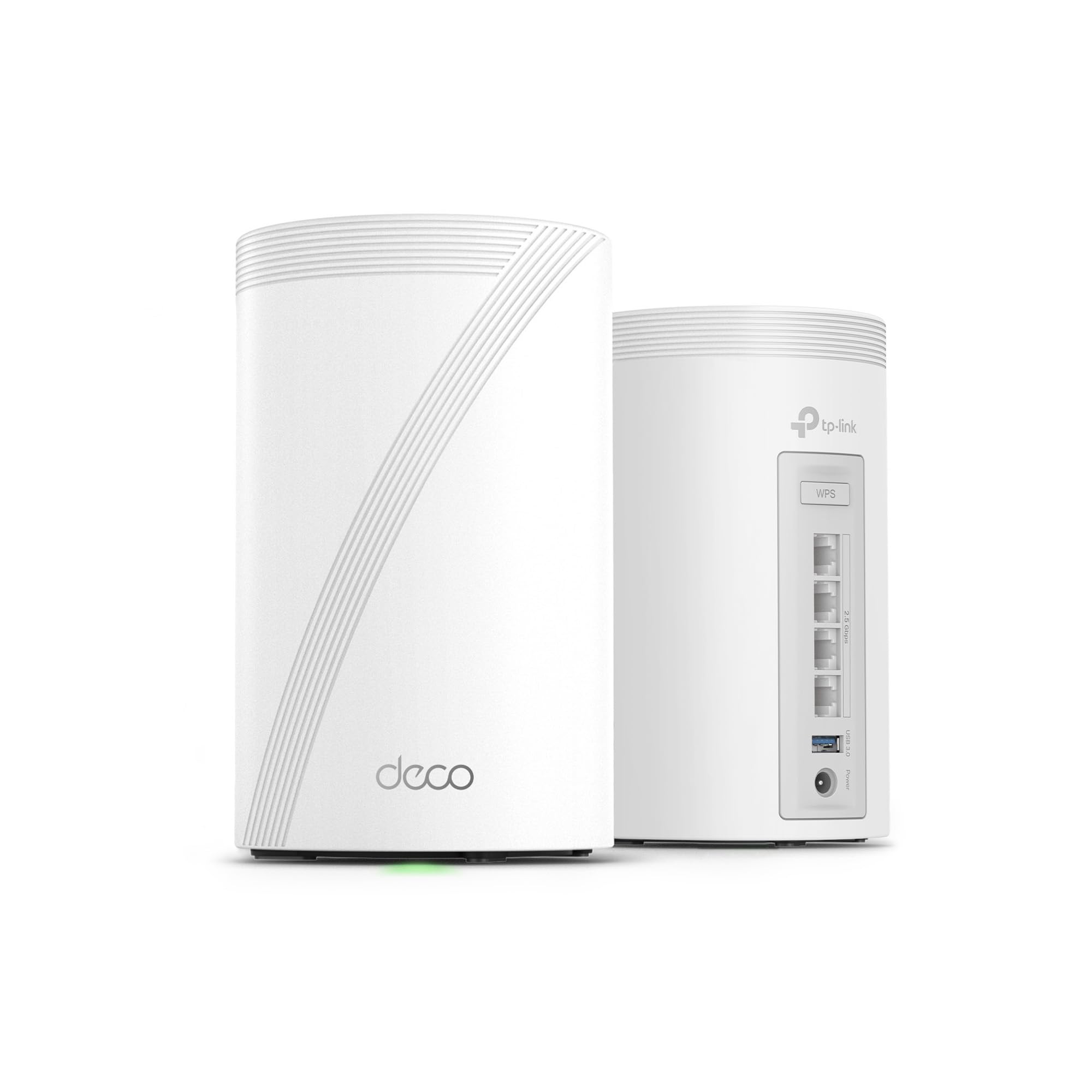
600+ ratings
Read Amazon ReviewsTP-Link Deco BE63
A two-unit Wi-Fi 7 mesh system for larger homes, multi-gig wired networks, and households with many connected devices.
- Two-unit tri-band Wi-Fi 7 mesh system with a BE10000 class rating and six streams.
- Wireless rates of up to 5,188 Mbps on 6 GHz, 4,324 Mbps on 5 GHz, and 574 Mbps on 2.4 GHz.
- Coverage rated for up to 5,800 square feet and support for over 200 devices.
- Four 2.5G WAN/LAN ports, one 10G WAN/LAN port, and USB 3.0.

Pros
- The three wireless bands and Wi-Fi 7 platform provide a strong capacity foundation for compatible newer devices.
- A generous rated coverage area makes the two-pack worth considering for homes where one router struggles to reach distant rooms.
Consider before buying
- The largest wireless rates and coverage figure are maximums, not guaranteed results; walls, placement, distance, and client capabilities influence actual performance.
- To benefit from its fastest wired connections, buyers need compatible multi-gigabit service or equipment; the advertised port capacity alone will not raise internet speeds.
Read the full review summary
The Deco BE63 combines three Wi-Fi bands with a listed maximum aggregate rate of BE10000 and coverage of up to 5,800 square feet for the two-pack.
Four 2.5G WAN/LAN ports, a 10G WAN/LAN port, USB 3.0, and support for simultaneous wired and wireless backhaul give it several ways to fit into a fast, evolving home network.
The listed wireless rates are theoretical maximums; actual reach and throughput depend on placement, walls, distance, and connected devices.
This system is best suited to households with a larger footprint, many active devices, or wired equipment that can use multi-gigabit connections. Its Deco app, unified network name, roaming features, HomeShield tools, and VPN support add practical flexibility.
Buyers should still check whether their internet plan, modem, client devices, and desired backhaul arrangement can make use of the hardware; a modem is required for most providers.
The buying factors
Deco BE63 Scorecard
Editorial scores reflect listed features and buyer fit; they are not laboratory measurements or customer ratings.
Wi-Fi capacity
Tri-band Wi-Fi 7 with a combined BE10000 class rating and separate 6 GHz, 5 GHz, and 2.4 GHz maximums offers substantial wireless headroom on paper.
Coverage potential
The two-pack is rated for coverage up to 5,800 square feet, a generous target for a mesh setup, though building layout and obstacles affect real reach.
Wired connectivity
Four 2.5G WAN/LAN ports plus a 10G WAN/LAN port and USB 3.0 give buyers useful options for a wired network and future upgrades.
Backhaul flexibility
The system can balance wired and wireless backhaul between Deco units; using backhaul requires at least two Deco units, which this bundle supplies.
Device capacity
Support for over 200 devices makes the system a plausible fit for busy smart homes, though device count alone does not guarantee a particular experience.
Setup and controls
The Deco app handles setup and management, while roaming, HomeShield, and VPN client and server support broaden its control options.
Key Features and Specifications of Deco BE63
- Two-unit tri-band Wi-Fi 7 mesh system with a BE10000 class rating and six streams.
- Wireless rates of up to 5,188 Mbps on 6 GHz, 4,324 Mbps on 5 GHz, and 574 Mbps on 2.4 GHz.
- Coverage rated for up to 5,800 square feet and support for over 200 devices.
- Four 2.5G WAN/LAN ports, one 10G WAN/LAN port, and USB 3.0.
- Simultaneous wired and wireless backhaul support between Deco units.
- Unified network name and AI-driven roaming, with setup and management through the Deco app.
- HomeShield network protection and parental controls, plus VPN client and server support.
Pros and Cons of Deco BE63
Pros
- The three wireless bands and Wi-Fi 7 platform provide a strong capacity foundation for compatible newer devices.
- A generous rated coverage area makes the two-pack worth considering for homes where one router struggles to reach distant rooms.
- Multi-gigabit ports provide room to connect faster wired equipment and plan for a faster internet service.
- The combination of wired and wireless backhaul gives more placement and network-layout flexibility.
- App management, roaming, HomeShield, and VPN features put several useful network controls in one system.
Consider before buying
- The largest wireless rates and coverage figure are maximums, not guaranteed results; walls, placement, distance, and client capabilities influence actual performance.
- To benefit from its fastest wired connections, buyers need compatible multi-gigabit service or equipment; the advertised port capacity alone will not raise internet speeds.
- The system requires a separate modem for most internet providers, so buyers should confirm their existing modem setup before replacing their router.
Who Should Buy Deco BE63?
Good fit
Consider the Deco BE63 if you are replacing an older router and extender setup in a larger home, especially if several people stream, game, work, or use smart devices at the same time.
Its tri-band Wi-Fi 7 design and stated capacity for over 200 devices give it room for a busy network, while a single network name and roaming features are intended to make movement between nodes more seamless.
It also makes sense for buyers building a wired backbone or preparing for multi-gigabit connections. The four 2.5G WAN/LAN ports and 10G WAN/LAN port offer flexibility for compatible internet service, switches, and wired clients.
Before buying, map where the two units can sit and whether Ethernet backhaul is practical; the best choice between wired and wireless backhaul depends on your home layout.
The app-based controls and included network features may appeal if you want one place to manage setup, parental controls, and VPN connections.
Check which HomeShield functions meet your needs, and confirm that the VPN setup you use works with the system's supported client or server approach.
Who should skip it
Skip this system if your home is small, your current router already covers it well, and you have no need for mesh coverage or multi-gigabit wired connections.
A feature-rich two-unit system may be more network capacity than that setup calls for.
Also look elsewhere if you only want the simplest low-cost way to extend basic Wi-Fi or if your devices and internet service cannot benefit from Wi-Fi 7 and multi-gigabit ports.
A less ambitious mesh system may be a better match for those priorities.
How the Deco BE63 fits a Wi-Fi 7 home network
Tri-band capacity for a busy household
The BE63 uses 6 GHz, 5 GHz, and 2.4 GHz bands, with maximum rates of 5,188, 4,324, and 574 Mbps respectively. These figures describe theoretical wireless capacity rather than the speed any one device should expect.
The 6 GHz band is most relevant when clients support it and can connect within suitable range; older devices can still use compatible Wi-Fi generations.
For a mixed household, the value is in having multiple bands available, while actual performance will depend on client mix and the home's layout.
Placement, coverage, and backhaul
The two-pack is rated to cover up to 5,800 square feet, making it a candidate for homes where a single access point leaves dead zones.
That figure is a planning reference, not a guarantee for every floor plan: dense walls, long distances, and node placement can change the result.
The system supports simultaneous wired and wireless backhaul, so buyers with Ethernet runs between floors can consider a wired link while retaining wireless options elsewhere.
Keep in mind that backhaul between units requires at least two Deco devices, and the bundle includes two.
Ports that support upgrades
Four 2.5G WAN/LAN ports and a 10G WAN/LAN port offer more wired capacity than a basic gigabit setup, with USB 3.0 as an additional connection.
These ports matter most when a modem, switch, storage device, or client can use them; they do not make a slower internet plan faster by themselves.
Before choosing the system for a wired upgrade, check the port requirements of your modem and other network equipment, and decide which unit and port will connect to each part of the network.
Management and household controls
Setup and administration run through the Deco app, which also provides firmware updates. AI-driven roaming aims to help devices move around a unified mesh network, while HomeShield includes network protection and parental controls.
VPN client and server support can let home devices use remote VPN services without installing VPN software on each one, and can allow VPN and regular internet connections at the same time.
These capabilities are useful for buyers who want network-level controls, but they should confirm that the specific parental-control and VPN options suit their setup.
Alternatives to Deco BE63
Whole Home & Mesh Wi-Fi Systems alternative
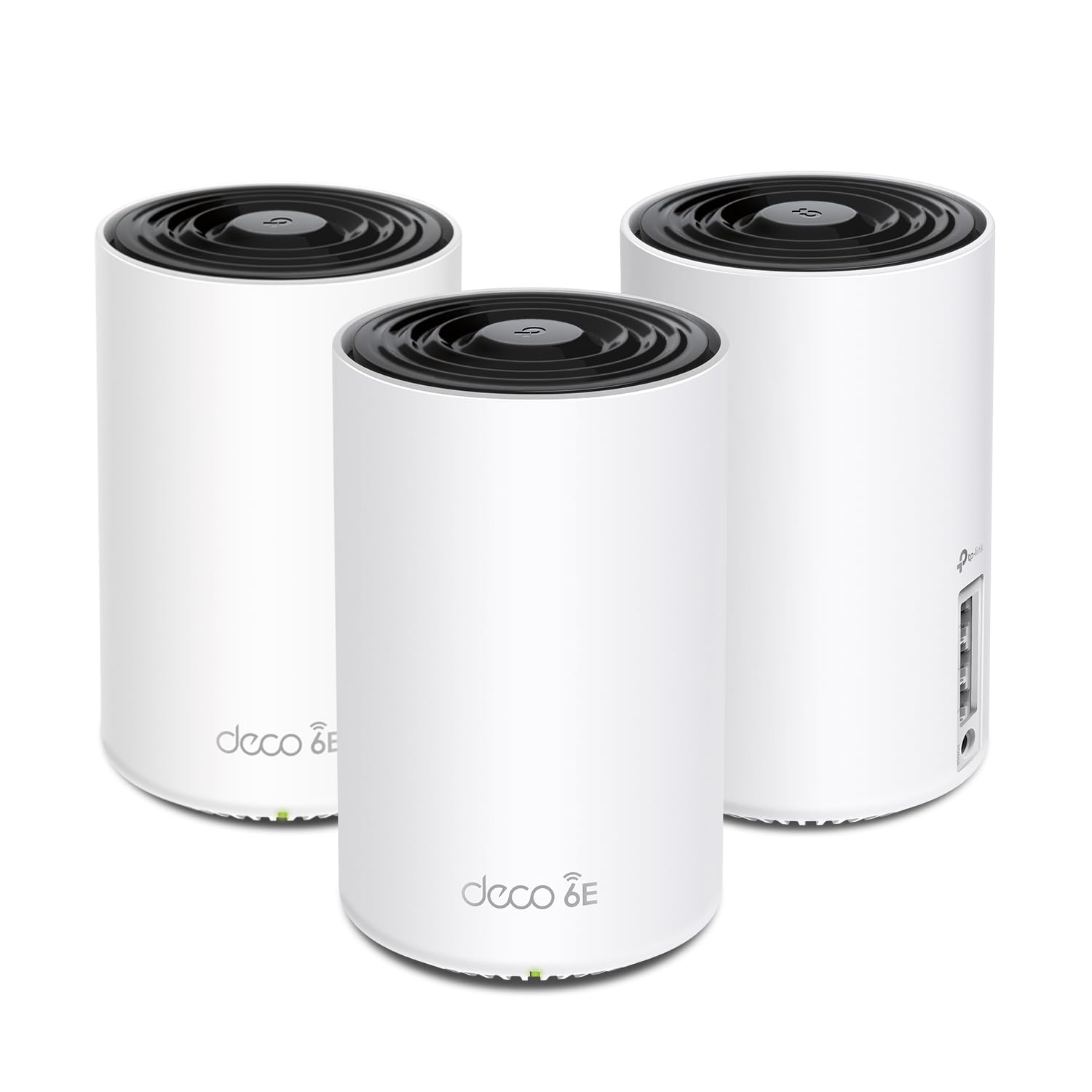
2,000+ ratings
Read Amazon ReviewsTP-Link Deco XE75
Choose the BE63 if you prioritize Wi-Fi 7 and multi-gigabit wired ports in a two-unit system.
The XE75 is a relevant option if the larger stated coverage area and three-node bundle are more useful than moving to Wi-Fi 7.
- The Deco XE75 is a three-unit Wi-Fi 6E tri-band system rated for up to 7,200 square feet and up to 5,400 Mbps total wireless speed.
- Its 6 GHz band can serve as backhaul by default or be switched to Wi-Fi network mode for compatible clients.
- The Deco BE63 pairs Wi-Fi 7 tri-band wireless with a two-unit bundle rated for up to 5,800 square feet, plus four 2.5G ports and a 10G WAN/LAN port.
Whole Home & Mesh Wi-Fi Systems alternative
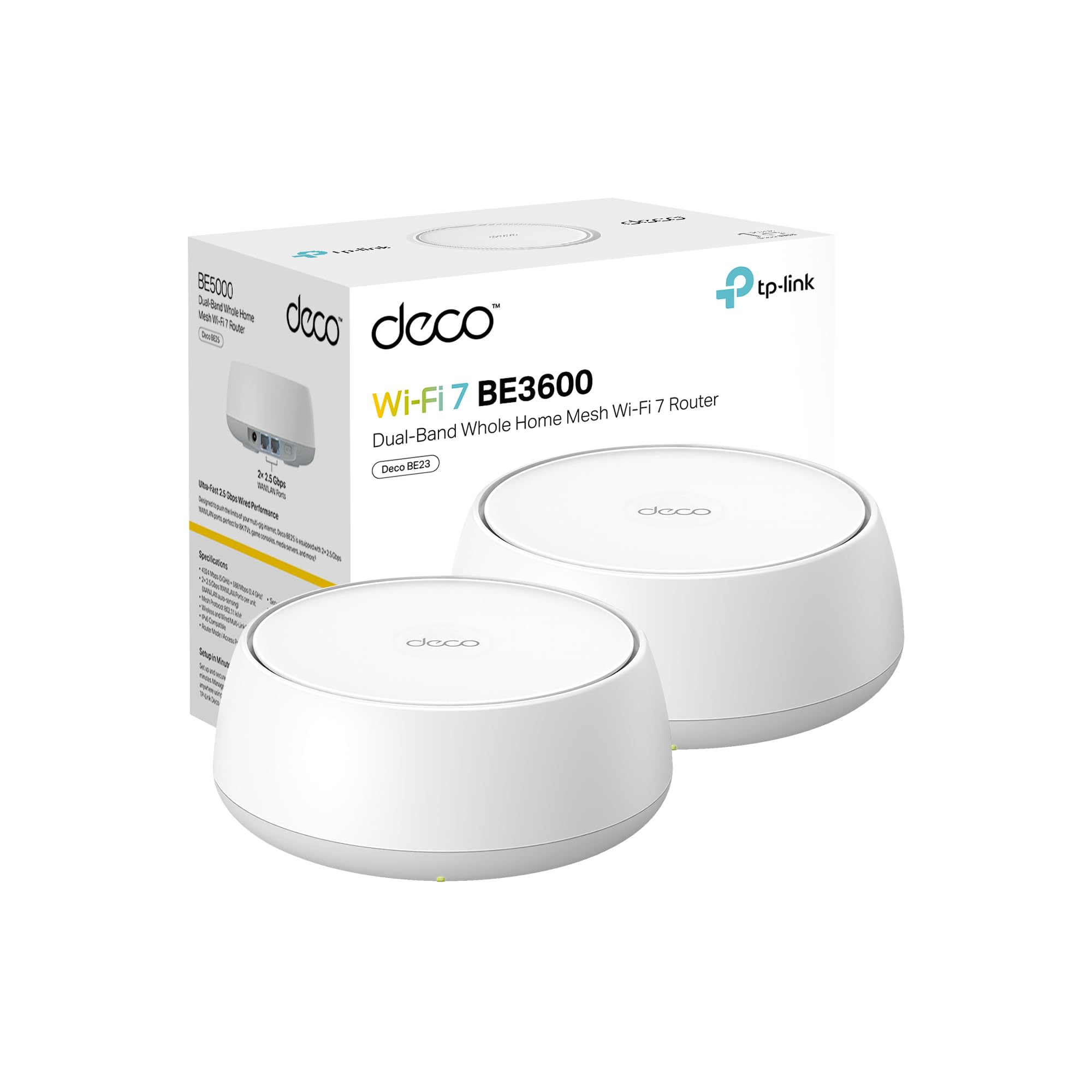
800+ ratings
Read Amazon ReviewsTP-Link Deco 7 BE23
Consider the BE23 if you want a two-unit Wi-Fi 7 mesh but do not need the BE63's tri-band design, larger stated coverage, or 10G port.
The BE63 is the stronger fit for buyers who value those additional capacity and connectivity options.
- The Deco 7 BE23 is a two-unit dual-band Wi-Fi 7 system rated for up to 4,500 square feet and up to 3.6 Gbps.
- Each unit has two 2.5G WAN/LAN ports, and the system supports MLO and wired or wireless backhaul.
- The BE63 offers tri-band Wi-Fi 7, a rated coverage area of up to 5,800 square feet for two units, and four 2.5G ports plus a 10G WAN/LAN port.
Is Deco BE63 Worth It?
The TP-Link Deco BE63 is worth considering for a larger or busier home that can use Wi-Fi 7, multi-gigabit connections, or mesh coverage across multiple rooms.
Its blend of tri-band wireless, extensive wired ports, flexible backhaul, and app-based controls gives it room to serve a network as it grows.
Buy it if those capabilities match your devices, internet plan, and home layout.
If your needs are limited to basic coverage or a slower wired network, compare simpler systems before paying for capacity you may not use; whichever setup you choose, treat the coverage and wireless speed figures as maximums rather than promises.
Your review at a glance
600+ ratings
Read Amazon ReviewsTP-Link Deco BE63
A two-unit Wi-Fi 7 mesh system for larger homes, multi-gig wired networks, and households with many connected devices.
- Two-unit tri-band Wi-Fi 7 mesh system with a BE10000 class rating and six streams.
- Wireless rates of up to 5,188 Mbps on 6 GHz, 4,324 Mbps on 5 GHz, and 574 Mbps on 2.4 GHz.
- Coverage rated for up to 5,800 square feet and support for over 200 devices.
- Four 2.5G WAN/LAN ports, one 10G WAN/LAN port, and USB 3.0.